

The next number on The Machine’s list: two people living one identity. Tonight I’m reviewing the 18th episode of Person of Interest (Season 1), “Identity Crisis.”
Spoiler warning: This post contains major plot spoilers. If you haven’t watched it, please do so before reading my analysis.
Navigation: Introduction, Episode Breakdown, Thoughts & Feelings, Standouts, Conclusion
Episode Breakdown
While Harold Finch and John Reese have pastries at The Library, they discuss their new number…
The Number
According to Finch, Jordan Hester has one of the smallest digital footprints he has ever seen. He (or she) has no photos, no driver’s license, and no social media accounts. However, Hester has two bank accounts, two apartments, and two phone bills.
Finch and Reese split and check Hester’s apartments. The apartment Reese went to has a desk, mattress, free weights, and nothing else. A receipt leads Reese to Hester’s workplace, a bar called The Hammer ‘n’ Ale. Reese learns that Hester works as a barback, which makes him and Finch wonder how he pays for two apartments.
The apartment Finch went to looks like a writer or an artist lives there. After checking her laptop, Finch hears the door opening, and he runs to a closet. He hears the other Hester (a woman) talking to a delivery man with a gigantic parcel. He updates Reese on his discovery, and The Man in the Suit only says, “It’s two people living one.”
Victim or Perpetrator?
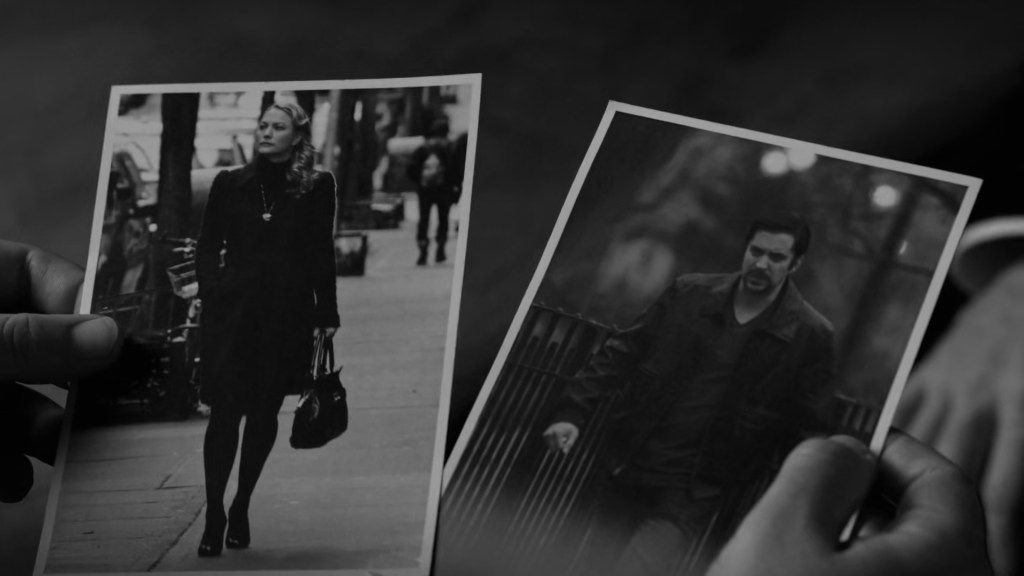
At this point, it’s hard to know whether Jordan Hester is the victim or perpetrator. Finch, Reese, and Detective Lionel Fusco must find out who the real Jordan Hester is.
Did They Stop the Crime in Time?
To be updated soon.
The Threads After
After the police arrested the fake Jordan Hester, Fusco gives Morrison his driver’s license. Morrison walks from prison a free man.
Back at The Library, a still-drugged Finch is puzzled about his massive collection of books. Reese assures Finch that the drugs will be out of his system in a few hours, and gives him a few water bottles to hydrate himself. The man in glasses asks, “You’re leaving?” Reese says he will keep an eye on him, and tells him to sleep. Finch asks if he doesn’t want to talk, and Reese turns him down, “You might regret that in the morning.” Finch offers to answer anything, but Reese walks away while saying, “Good night, Harold.” Still high, Finch says, “Good night, Nathan.”
Other Threads
In the entire episode, Detective Joss Carter rejects Reese’s phone calls several times. She rejects it before and during an actual homicide investigation with Detective Raymond Turney.
FBI Special Agent Nicholas Donnelly approaches Carter in the precinct to discuss The Man in the Suit. Because of the vigilante’s connection to the vehicle assault that led to Scott Powell’s kidnapping and many unsolved homicides and assaults, Donnelly and the bureau have the case’s attention. They also know the vigilante is a former Special Forces soldier who is involved in recent robberies and shootings (including gangsters and a Stasi operative).
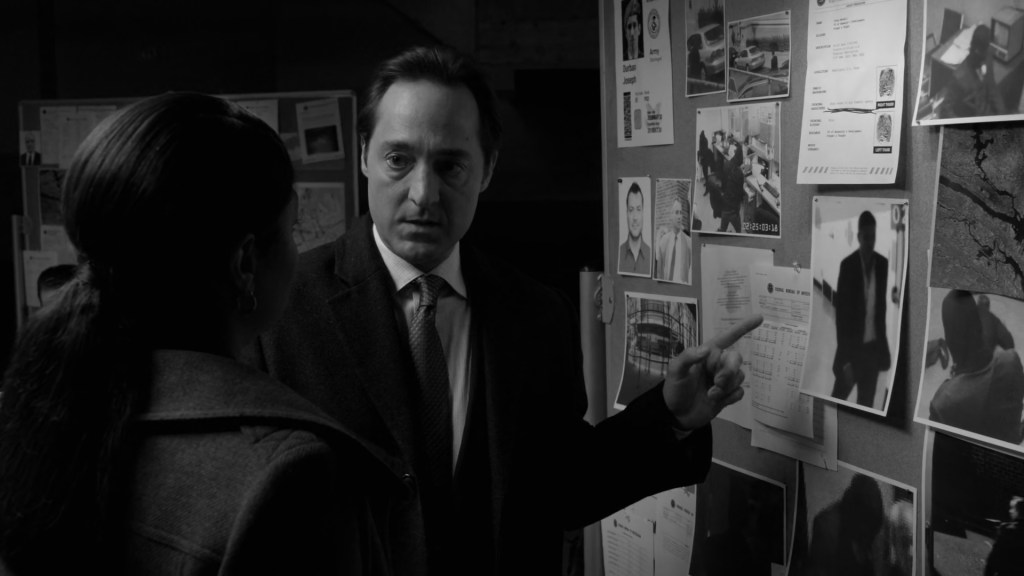
Donnelly brings Carter to an undisclosed location where they discuss The Man in the Suit’s connection to the CIA and his other assumptions (the vigilante sells his services to the highest bidder and he works for the crime boss, Carl Elias). Carter asks Donnelly about this interest in the case, and he wants to expose the Company for what it’s become and take down the vigilante himself. Donnelly expresses the bureau’s support to Carter, and offers to review old files and interview witnesses.
Navigation: Introduction, Episode Breakdown, Thoughts & Feelings, Standouts, Conclusion
Thoughts & Feelings
The Episode Title
A term coined by renowned psychoanalyst Erik Erikson, an identity crisis is a period of deep reflection and examination of various perspectives on oneself.
On The Real Jordan Hester
While the real Hester helps Reese in tying up the fake Hester’s goons, he reflected on the identity theft he experienced:
…if people keep thinking I’m this bad guy, why do I keep trying to convince them that I’m not?
Honestly, hearing that shattered my heart because it sounded self-undervaluing and exhausted at the same time. Because a cruel person took the identity of a simple, private man like him, his life turned upside down, and he had enough of proving to people he’s innocent. And
But then he said his real intentions to lure the identity thief out in the open, which sounds heroic in a way. He may be tired of proving his innocence, but a part of him still wants to do the right thing (even if Reese thought Hester’s plan was terrible). I’m glad that the real Hester got his identity and life back in the end.
Navigation: Introduction, Episode Breakdown, Thoughts & Feelings, Standouts, Conclusion
Standouts
Carter Away from Team Machine
While Carter shares Finch and Reese’s mission to save lives, in “Baby Blue,” Reese’s decision to give Don Morreti’s location to Elias (to save the baby) led to her departure from Team Machine.
In “Identity Crisis,” not long after cutting ties with the vigilante pair, Carter had second thoughts. Notably, when she reviewed her current homicide case on her workstation, she said, “Must be nice, helping out people who are still alive.” In the end, she stands firm about her decision, rejecting Reese’s calls all throughout the episode.
But somehow she was reminded of Reese when FBI agent Donnelly approached her about a case she’s working on, The Man in the Suit. There are lines you can never go back from, and I think that happened when Carter and Reese crossed paths in the first episode, and she helped him and Reese in “Number Crunch.”
The Perpetrator Line is Blurred (I Think)
Frankly, “Identity Crisis” is the first Person of Interest episode where I was totally confused about who the perpetrator is, which is interesting, to say the least. Later, I realized The Machine sent Jordan Hester’s number to the team to stop the fake Hester from killing the real one… and if ever the real Hester does something he can never undo, they will be there, too.
“Good night, Nathan.”
Over the previous episodes, Finch and Reese’s partnership (and friendship) grew, and that bond’s strength became more evident in “Identity Crisis.” When the fake Hester drugged Finch in her apartment and Reese felt something went wrong, he called Fusco to save his boss. When he brought Finch back to their base of operations, he showed concern by giving him water, looking after him, and telling him to rest.
But here’s where the bond is tested: a drugged Finch offered Reese to answer anything he wanted to ask about him. It was tempting, especially since Reese is secretly digging information on Finch with Fusco’s help. But instead of asking, The Man in the Suit simply said good night to this friend. He even reminded Finch that he’s a very private person. The more interesting part is what Finch said afterwards: “Good night, Nathan.” (A nod to his fallen friend, Nathan Ingram.) Even though Finch was under the influence, the hacker and the ex-spy may have reached a friendship similar to Harold and Nathan’s (and I believe that’s a good thing).
Navigation: Introduction, Episode Breakdown, Thoughts & Feelings, Standouts, Conclusion
Conclusion
In “Identity Crisis,” Finch, Reese, and Fusco had to divide and conquer to catch the perpetrator who stole a whole life. Reese and Finch’s growth as friends is also more apparent here. Meanwhile, Carter returned to being just a detective, even though she has doubts about leaving Team Machine. But because Special Agent Donnelly intended to catch The Man in the Suit, she was reminded of the line she can never turn back from.
Rating: 👁️👁️👁️👁️

Navigation: Introduction, Episode Summary, Thoughts & Feelings, Standouts, Conclusion
Disclaimer: This is simply an in-depth analysis from a fan. No copyright infringement is intended in any show-related media featured in this post.


